The Signal Buried in the Noise: Rebuilding On-Call Alerting Around Human Limits
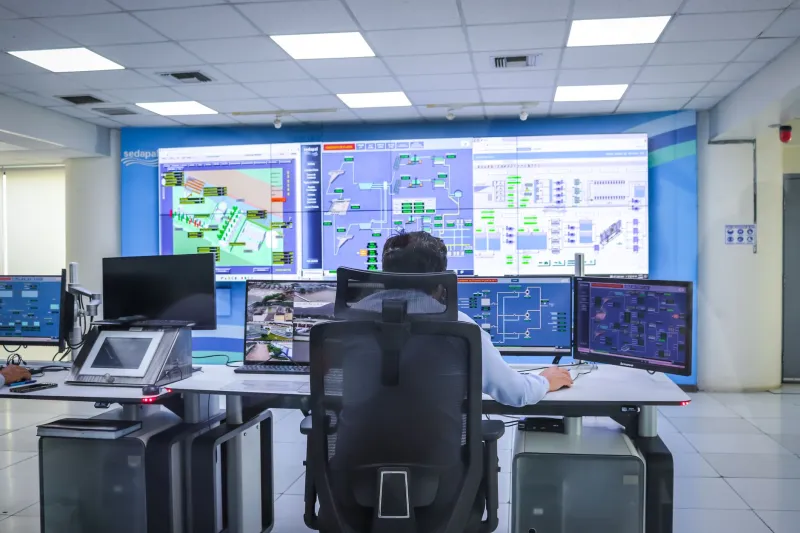
Somewhere in your organization, an on-call engineer is awake at 2:47 a.m. Their phone has fired six times tonight. The first alert resolved itself before they finished reading it. The second was a known flap on a metric that the team has been meaning to tune for three months. The third was a threshold breach on a service that runs hot every night between midnight and four and always recovers. The fourth, fifth, and sixth followed the same pattern.
And then the seventh fires. This one is different. This one is the beginning of a cascading failure that will affect paying customers in three time zones. But the engineer's capacity for discrimination — the cognitive ability to distinguish this alert from the previous six — has been worn down by the previous six. The response is slower than it should be. The outcome is worse than it needed to be.
This is alert fatigue. It is not a technology problem. It is a design problem — one that most organizations have created by building monitoring systems around what is technically convenient to measure rather than what is operationally meaningful to act on.
How Alerting Systems Become Noise Machines
The architecture of alert fatigue is straightforward. Monitoring tooling makes it easy to create alerts. Creating alerts feels like being thorough. Thoroughness is rewarded culturally. Over time, the alert inventory grows without any corresponding discipline about what each alert is actually supposed to communicate or require.
The result is a monitoring system that has lost its primary function: directing human attention toward conditions that require human intervention. When every threshold breach, every transient anomaly, and every known-and-accepted system behavior generates a notification, the system is no longer a precision instrument. It is a fire hose.
US technology organizations have invested heavily in observability tooling over the past decade — distributed tracing, structured logging, real-time dashboards, anomaly detection. The tooling is genuinely powerful. But the sophistication of the instrumentation has not been matched by equivalent sophistication in the alerting policies that sit on top of it. Teams have more data than ever and less clarity about what it means.
There is also a cultural dynamic worth naming. In many engineering organizations, the number of alerts configured is treated as a proxy for the maturity of the monitoring practice. More alerts suggest more coverage. This logic is seductive and wrong. Coverage is a property of instrumentation. Alerting is a property of response design. Conflating them produces systems that are comprehensively instrumented and operationally useless.
The Cognitive Architecture of On-Call Work
Designing effective alerting requires taking seriously the cognitive constraints of the humans who receive and act on alerts. Human attention is not infinitely divisible. Working memory has limits. The ability to make accurate, high-stakes decisions degrades with fatigue, stress, and information overload — conditions that are endemic to on-call rotations.
Research on decision-making under load is consistent on this point: the quality of judgment deteriorates not linearly but acceleratively as cognitive burden increases. An engineer managing their eighth alert in two hours is not operating at seven-eighths of their normal capacity. They are operating at a fraction of it. The implications for alert design are direct: every unnecessary alert is not merely a minor annoyance. It is a measurable degradation of the response quality available for the alerts that follow.
Effective alerting systems are built around a simple principle: an alert should represent a condition that requires a human decision that cannot be made by an automated system. If the appropriate response to an alert is always the same sequence of actions, it should be automated, not paged. If the condition it describes consistently resolves without intervention, the alert should be removed or demoted to a log entry. If the threshold is consistently breached during known operational patterns, the threshold is wrong.
A Framework for Alert Triage
Rebuilding an alerting practice begins with an audit of the existing alert inventory. For each configured alert, three questions should be answered honestly. First: in the last ninety days, what percentage of firings of this alert required a human response that made a material difference to system behavior or user experience? Second: when this alert fires, is the appropriate action documented and consistently followed, or does it require genuine judgment? Third: has this alert ever fired simultaneously with a critical incident in a way that obscured rather than clarified the situation?
Alerts that fail the first question should be eliminated or converted to passive log entries. Alerts that fail the second should be automated. Alerts that fail the third — those that fire frequently enough to create background noise during genuine emergencies — should be restructured, rethresholded, or subordinated to higher-level composite signals.
What survives this audit should be organized into explicit severity tiers, each with distinct response expectations. A P1 alert represents a condition with confirmed, active user impact requiring immediate response. A P2 represents a degradation that is not yet user-facing but will become so without intervention within a defined window. Everything below that tier should not wake anyone up. It should appear in a dashboard, generate a ticket, and be addressed during business hours.
Designing for the Worst Moment
The ultimate test of an alerting system is not how it performs on a quiet Tuesday morning. It is how it performs at 3 a.m. on the night when something genuinely breaks. That is the scenario the system should be designed around — not the average case, but the worst case, when the engineer receiving the page is tired, the context is incomplete, and the stakes are high.
This means alert messages should be written for that moment. They should identify the affected system, the observable symptom, the likely impact, and the first diagnostic step — not because the engineer cannot figure these things out, but because at 3 a.m. after six prior pages, the cognitive load of reconstruction is itself a risk.
It also means that the alerting system should be treated as a living artifact, not a configuration that is set once and inherited indefinitely. Alert policies should be reviewed after every significant incident, with explicit attention to whether the alerting environment aided or impeded the response. Teams that conduct this review systematically tend to converge, over time, on monitoring systems that are quieter, more precise, and far more effective at the function they were always supposed to serve: getting the right information to the right person at the moment it can actually be used.


