Approval Theater: The Hidden Velocity Tax Embedded in Your Code Review Process
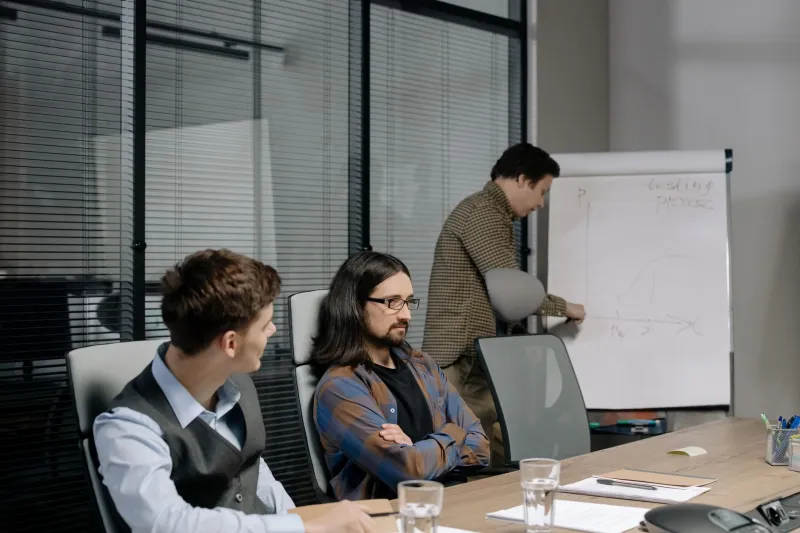
Consider the journey a routine bug fix takes in a typical mid-sized US software organization. A developer identifies the issue, writes the correction, and opens a pull request. The code waits for reviewers, who are occupied with their own work. A review surfaces minor comments unrelated to correctness. Revisions are made. A second review is requested. The change control board meets on Thursdays. The fix, which took ninety minutes to write, ships ten days later.
This is not an exceptional story. For many engineering teams, it is Tuesday.
The accumulation of approval steps, review queues, and sign-off requirements that characterizes modern software development governance has a stated purpose: quality assurance, risk management, compliance. These are legitimate concerns. The problem is that the mechanisms designed to serve them have, in many organizations, become detached from the outcomes they were meant to produce. What remains is the process without the protection — overhead that consumes engineering capacity while providing the appearance of rigor rather than its substance.
How Oversight Becomes Obstruction
The drift from useful governance to counterproductive bureaucracy rarely happens by design. It happens incrementally. An incident occurs. A process is added. Another incident occurs. Another layer is added. Over time, the organization accumulates a sediment of approval requirements, each individually defensible, collectively paralyzing.
The most common manifestation is the multi-stage code review process. In principle, peer review is one of the highest-value activities in software development — a mechanism for catching defects early, transferring knowledge, and maintaining coherent design. In practice, when review queues are long and reviewer attention is fragmented, the process degrades. Reviews become cursory. Comments cluster around style and formatting rather than logic and architecture. The approval becomes a formality rather than a genuine assessment.
Change control boards represent a more acute version of the same problem. Designed for environments where changes carry significant operational risk — financial systems, regulated industries, critical infrastructure — they are frequently applied to contexts where the risk model does not warrant them. When every deployment requires a committee review, the natural response from engineering teams is to batch changes, reducing deployment frequency and increasing the blast radius of each release. The governance mechanism intended to reduce risk ends up concentrating it.
The Trust Deficit at the Center
Beneath most approval-heavy workflows is an unacknowledged trust deficit. The organization does not fully trust its engineers to make sound decisions independently. This is sometimes warranted — there are environments where the consequences of error are severe enough to justify extensive oversight. But it is more often a cultural artifact, a residue of past incidents or organizational politics that has calcified into permanent process.
The cost of this trust deficit is not merely velocity. It is also the signal it sends to engineers about their role in the organization. When every decision requires external validation, the message received is that individual judgment is not valued. Over time, engineers stop exercising judgment. They optimize for compliance rather than quality. They learn to pass things through the process rather than to think carefully about whether the thing they are passing through is correct. The oversight mechanism, paradoxically, can reduce the quality of thinking it was designed to ensure.
This dynamic is particularly acute in US technology organizations competing for engineering talent in a tight labor market. Engineers with options — which is to say, most senior engineers — gravitate toward environments where their judgment is trusted and their time is respected. Organizations that have allowed approval workflows to become adversarial tend to discover this in their attrition patterns before they discover it in their delivery metrics.
Distinguishing Signal from Ceremony
Not all review processes are equivalent. The relevant question is not whether governance exists but whether specific governance mechanisms produce outcomes proportionate to their cost. A useful diagnostic is to audit approval workflows against two criteria: what specific failure mode does this step prevent, and what is the evidence that it prevents it?
Many approval requirements fail this test. They exist because something was added at a moment of organizational stress and never revisited. Applying this audit systematically — examining each step in the change pipeline and demanding a concrete, evidence-based justification — typically reveals a significant proportion of overhead that can be eliminated without increasing risk.
What remains after that audit should be streamlined rather than merely preserved. Review queues should have explicit service-level expectations. Reviewers should be assigned rather than volunteered. Architectural sign-offs should be time-bounded and delegated to the smallest group that has the relevant expertise. The goal is governance that is fast enough to be compatible with competitive delivery cadences.
Building Toward Trust-Based Delivery
The alternative to approval theater is not the absence of oversight. It is the replacement of pre-deployment gatekeeping with post-deployment observation. Organizations that have made this transition successfully share a common investment: they have built the observability and rollback capability that makes it safe to trust engineers to deploy.
When a team can deploy a change and know within minutes whether it has degraded system behavior — and can reverse that change in seconds if it has — the risk calculus for pre-deployment approval shifts fundamentally. The question is no longer whether the change might be wrong; it is how quickly a wrong change can be identified and corrected. A fast, reliable feedback loop is a more effective quality mechanism than a slow, bureaucratic one.
This requires investment in tooling, in monitoring, and in the cultural willingness to treat production as a learning environment rather than a pristine artifact to be protected. It also requires leadership that is willing to articulate explicitly what level of trust it extends to its engineering organization — and to design processes that reflect that trust rather than contradict it.
The teams that ship fastest are not the ones with the fewest standards. They are the ones whose standards are embedded in automated systems rather than manual workflows, whose governance is proportionate to actual risk, and whose engineers spend their time writing code rather than waiting for permission to ship it.